

DoorDash Launches Native Shopify Integration: What It Means for Local Retailers
DoorDash and Shopify are making it easier for local retailers to meet a growing customer expectation: getting products delivered quickly, without sacrificing the convenience of online shopping.
DoorDash has introduced a native Shopify sales channel that allows eligible brick-and-mortar merchants to publish products to the DoorDash marketplace, synchronize inventory, manage orders through Shopify, and offer local on-demand delivery.
The integration is launching in the United States, with international expansion planned for the months ahead.
For Shopify merchants with physical retail locations, this represents more than another delivery option. It creates a new customer acquisition and fulfillment channel that connects online commerce, local inventory, and same-day demand.
DoorDash Is Now a Native Shopify Sales Channel
Previously, joining a third-party marketplace could require a separate onboarding process, manual catalog uploads, duplicate inventory management, and an additional operational dashboard. The new integration is designed to remove much of that friction.
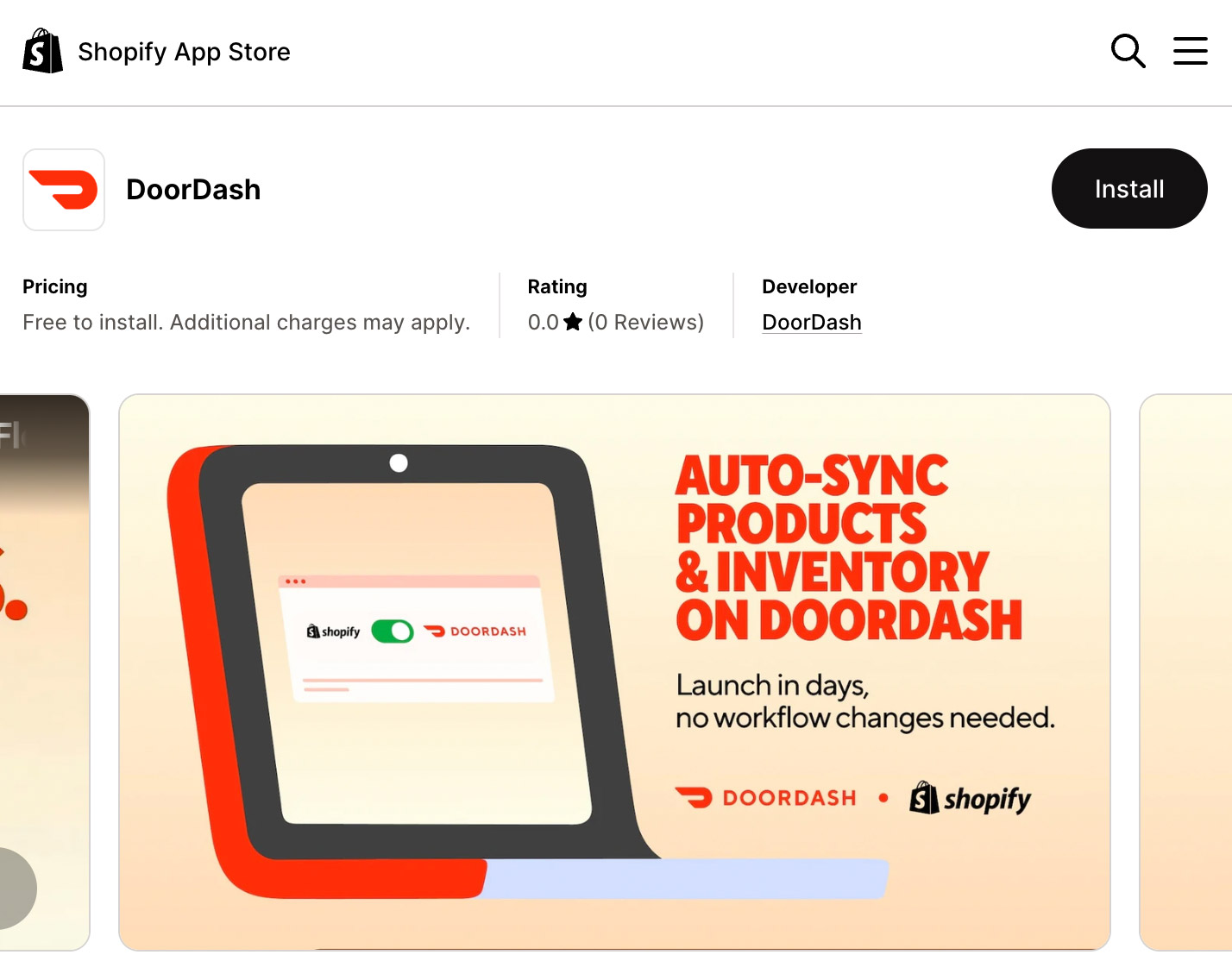
Merchants can install DoorDash from the Shopify App Store and activate it as a sales channel directly within their existing Shopify environment. Product and inventory information automatically syncs between Shopify and DoorDash, allowing merchants to continue managing their catalog from Shopify rather than maintaining separate records.
Merchants can also choose which products appear on their DoorDash storefront instead of publishing their entire Shopify catalog.
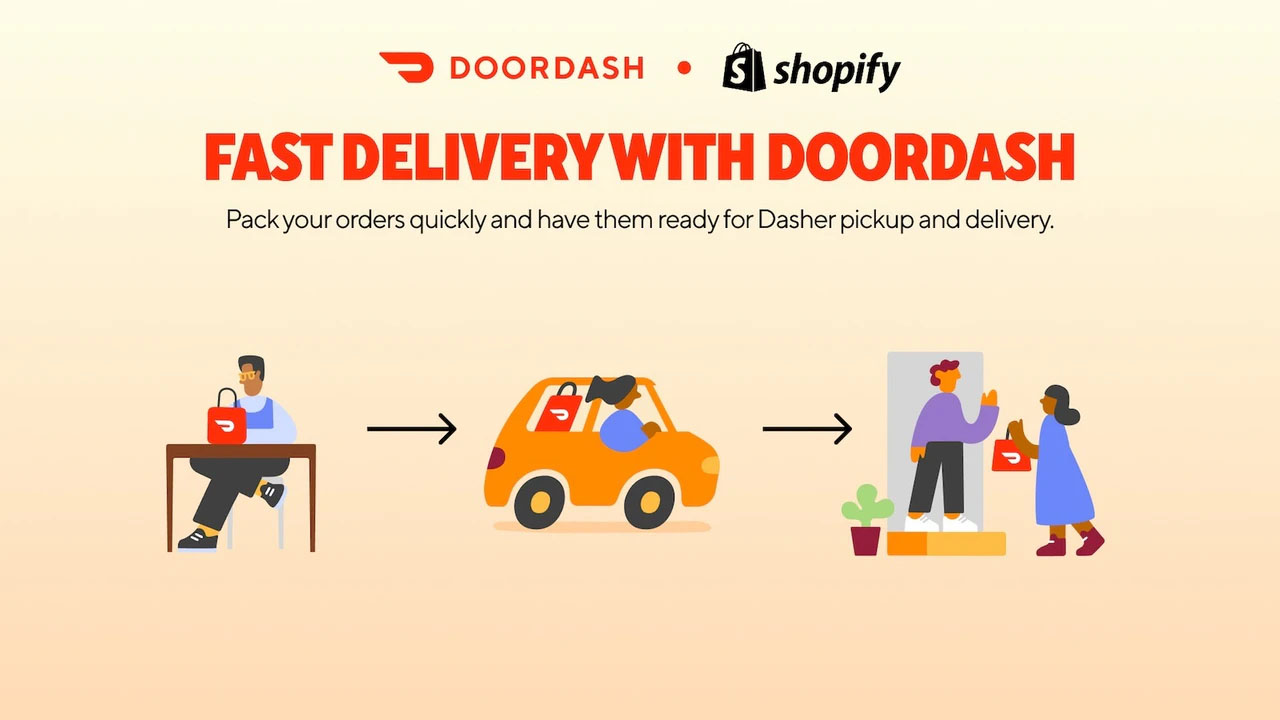
When an order is placed, store employees prepare the products for pickup. A Dasher then collects the order from the physical store and delivers it to the customer, potentially in as little as an hour.
How the DoorDash Shopify Integration Works
The integration creates a relatively simple operational flow:
- The merchant installs the DoorDash app from the Shopify App Store.
- DoorDash is added as a Shopify sales channel.
- The merchant selects the products to list on DoorDash.
- Product information and inventory are synchronized from Shopify.
- Customers discover and purchase the products through DoorDash.
- The merchant prepares the order at a physical retail location.
- A Dasher picks up and delivers the order.
- DoorDash orders can be viewed within Shopify.
The app is free to install, although DoorDash’s standard fees and commissions apply and vary depending on the features selected by the merchant.
The Biggest Benefits for Shopify Retailers
Reach customers who may not visit your website
DoorDash is no longer used only when someone wants restaurant delivery. Consumers increasingly open the platform to find groceries, beauty products, electronics, pet supplies, household goods, gifts, and other everyday items.
The Shopify app gives merchants access to DoorDash’s reported 42 million monthly active users, creating an additional way for local customers to discover their stores and products.
This is an important distinction. DoorDash is not simply acting as a carrier after a customer purchases from the merchant’s website. It can also function as a marketplace and discovery channel.
A shopper who has never heard of a particular store could discover it while searching DoorDash for a product needed that day.
Turn physical stores into local fulfillment centers
Many Shopify retailers already have inventory positioned close to customers. The challenge has been making that inventory easy to discover, purchase, and deliver quickly.
The DoorDash integration allows physical stores to act as local fulfillment nodes without requiring the retailer to hire drivers or manage its own delivery fleet.
This could be especially useful for purchases driven by immediacy, including:
- Last-minute gifts
- Beauty and personal care products
- Baby supplies
- Home and office essentials
- Sporting goods
- Electronics and accessories
- Apparel needed for an event
- Books, stationery, and craft supplies
In these situations, delivery speed can become part of the product value proposition.
Keep Shopify as the central commerce platform
One of the strongest aspects of the integration is that merchants do not need to abandon their existing Shopify workflows.
Products and inventory are synchronized automatically, while DoorDash orders remain visible within Shopify. This reduces duplicate data entry and lowers the likelihood of customers ordering products that are no longer available at the store.
For merchants already managing multiple storefronts, locations, and sales channels, keeping Shopify at the center of the ecosystem can make the expansion more manageable.
Launch without developing a custom delivery system
Building an on-demand delivery experience independently can require integrations with delivery providers, custom order-routing logic, location-based inventory, operational dashboards, customer notifications, and exception-handling processes.
The DoorDash sales channel packages many of those capabilities into an app that DoorDash says can help merchants launch in days rather than weeks.
That does not eliminate the need for planning, but it substantially lowers the technical barrier to testing on-demand retail.
Who Is Eligible to Use the DoorDash Shopify App?
The integration is currently focused on Shopify merchants with brick-and-mortar locations in the United States. Products are fulfilled directly from a physical store, so it is not designed as a traditional nationwide shipping solution.
DoorDash’s current retail merchant guidance identifies categories such as:
- Fashion
- Beauty
- Electronics
- Sporting goods
- Baby products
- Home goods and home improvement
- Office supplies and stationery
- Arts and crafts
- Books
DoorDash also offers separate merchant solutions for businesses selling groceries, flowers, pet supplies, convenience products, and alcohol. Businesses primarily selling services, wholesale products to other businesses, or CBD products may not qualify under the standard retail program.
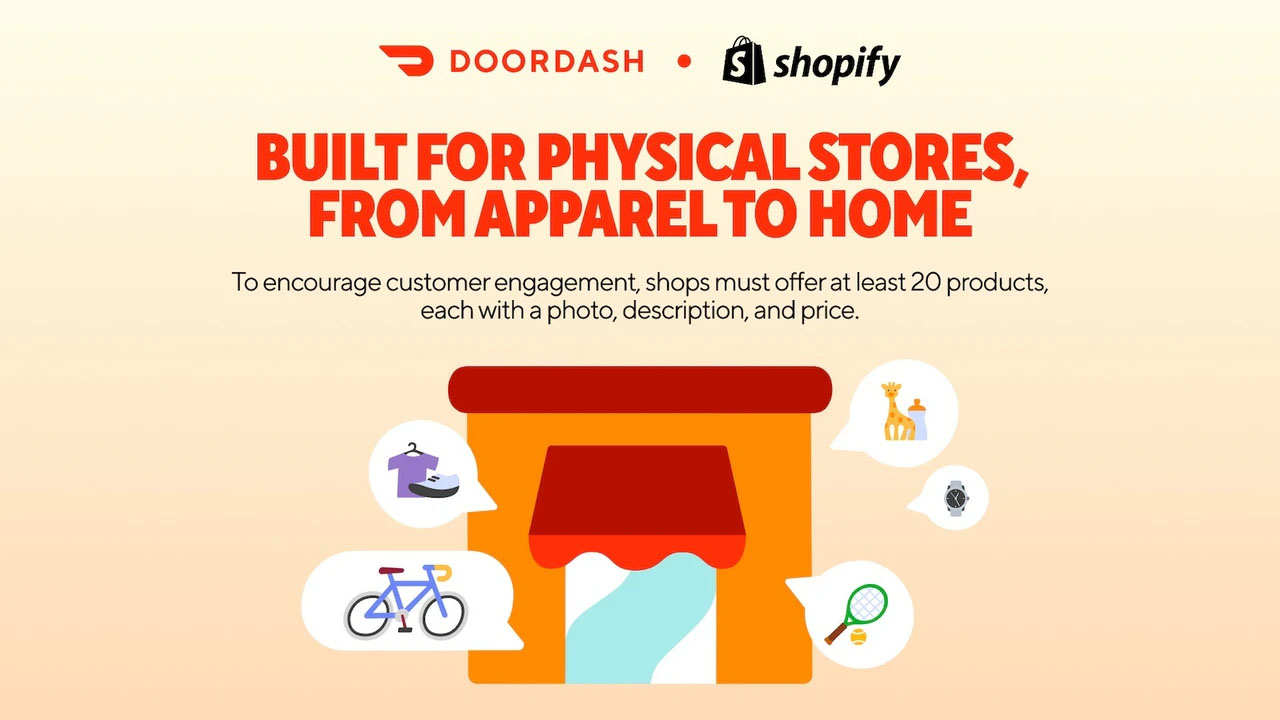
DoorDash’s general retail guidance currently states that qualifying stores should offer at least 250 products with corresponding photos, descriptions, and prices. Merchants should confirm the exact requirements presented during Shopify app installation because compatibility and eligibility can vary by store configuration and business category.
What Merchants Should Evaluate Before Installing
The app may simplify the technical integration, but merchants should still determine whether the channel makes sense operationally and financially.
Product assortment
Not every product needs to be listed on DoorDash.
Merchants should prioritize products that benefit from immediate availability, have sufficient margins, are easy to pick and pack, and are consistently stocked at participating locations.
A curated DoorDash assortment may perform better than automatically publishing a large, unstructured catalog.
Inventory accuracy
Real-time inventory synchronization is only as reliable as the underlying Shopify inventory data.
Retailers should review:
- Location-level inventory accuracy
- Inventory adjustment procedures
- Shopify POS configuration
- Safety-stock rules
- Product availability settings
- Processes for damaged or misplaced merchandise
If store inventory is inaccurate, the customer experience can break down even when the technical integration is working correctly.
Store operations
Store teams will need a clear process for recognizing, accepting, preparing, packaging, and handing off DoorDash orders.
Before launching, merchants should define:
- Who is responsible for incoming orders
- Expected preparation times
- Packaging standards
- Product substitution policies
- Procedures for unavailable products
- Pickup areas for Dashers
- Escalation paths for delayed orders
On-demand delivery introduces a new operational promise. The store must be prepared to fulfill it consistently.
Margins and channel economics
The app is free to install, but DoorDash fees and commissions still apply.
Merchants should model the economics by product category and consider average order value, product margin, packaging costs, labor requirements, promotional spending, refunds, and marketplace commissions.
The additional reach can be valuable, but revenue from a new channel should not be confused with profitable revenue.
Brand and customer experience
Customers purchasing through DoorDash will experience the merchant’s brand within a third-party marketplace.
Product titles, photography, descriptions, pricing, packaging, availability, and fulfillment quality will all influence that experience.
Merchants should treat the DoorDash storefront as another customer-facing digital property, not simply a background delivery integration.
Why This Integration Matters for the Future of Ecommerce
The DoorDash and Shopify integration reflects a broader shift in digital commerce.
Customers no longer think of ecommerce as a transaction that must take several days to arrive. Depending on the product and the situation, they may expect delivery today, within a few hours, or as soon as possible.
At the same time, product discovery is becoming increasingly distributed. Consumers may begin their purchasing journey on Google, social media, an AI assistant, a retailer’s website, a marketplace, or a delivery app.
The retailers positioned to succeed will be those that can make inventory available wherever customers are searching while maintaining centralized control over products, inventory, orders, and customer experience.
For Shopify merchants, DoorDash can now become part of that connected commerce ecosystem.
A physical store is no longer only a destination customers visit. It can also function as a showroom, pickup point, service center, inventory hub, and rapid local fulfillment center.
Is the DoorDash Shopify Integration Right for Your Business?
The strongest candidates are likely to be retailers that:
- Operate one or more physical stores in the United States
- Maintain accurate location-level inventory in Shopify
- Sell products customers may need immediately
- Have sufficient margins to support marketplace fees
- Can prepare orders quickly during store hours
- Want to reach new local customers
- Are ready to support another active sales channel
The integration may be less suitable for online-only merchants, retailers with unreliable store inventory, highly customized products, low-margin assortments, or products that require complex fulfillment.
A controlled pilot may be the best starting point. Merchants can begin with select products and locations, measure demand and profitability, improve store workflows, and expand based on actual results.
Preparing Your Shopify Store for On-Demand Commerce
Installing an app is only one part of launching a successful new sales channel.
The underlying Shopify setup, product data, inventory configuration, location structure, analytics, and operational workflows all need to support the experience.
As a Shopify Platinum Partner, Absolute Web helps retailers evaluate, implement, and optimize connected commerce experiences across digital and physical channels.
Our team can help with:
- Shopify architecture and configuration
- Product catalog and merchandising strategy
- Multi-location inventory setup
- Shopify POS and store operations
- Marketplace and sales-channel integrations
- Custom order and fulfillment workflows
- Analytics and attribution
- Conversion rate optimization
- Ongoing ecommerce support
The new DoorDash integration gives local retailers another opportunity to transform nearby inventory into immediate customer demand. The merchants that approach it strategically, rather than treating it as another app installation, will be best positioned to turn that opportunity into sustainable growth.
Promoted
EEE Miami 2027 – The Most Inspiring Ecommerce Conference

February 3-5, 2027 | Miami, FL
In-Person Event | Get Tickets

More Articles

Building Trust, Community & Emotional Loyalty in Digital Commerce
At EEE Miami 2026, one of the most refreshing conversations wasn’t about ad hacks, funnels, or scaling spen...
Shopify Spring 2026 Editions: What Ecommerce Brands Should Prioritize Next
Shopify’s Spring 2026 Editions is more than another product release. It is a clear signal of where ecommerc...
Supplement CRO: The 4-Pillar Testing Framework for Shopify Supplement Brands
Most supplement brands do not have a traffic problem. They have a conversion clarity problem. The category ...

Growing LTV from Online Shoppers Through Smarter Customer Insights
At EEE Miami 2026, one theme kept surfacing across conversations, panels, and hallway chats: how do you gro...

The Future of Commerce: Human Creativity in an AI-Driven World
At EEE Miami 2026, one of the most practical and honest conversations around AI in ecommerce didn’t revolve...
Is Your Ecommerce Website Ready for AI Agents? The New Frontier of Ecommerce SEO
For years, ecommerce optimization focused on two audiences: humans and search engines. Today, there is a th...

Building What Matters: The Founder’s Blueprint for Brand Longevity
In today’s ecommerce landscape, building a brand is easier than ever. Building one that lasts? That’s a com...
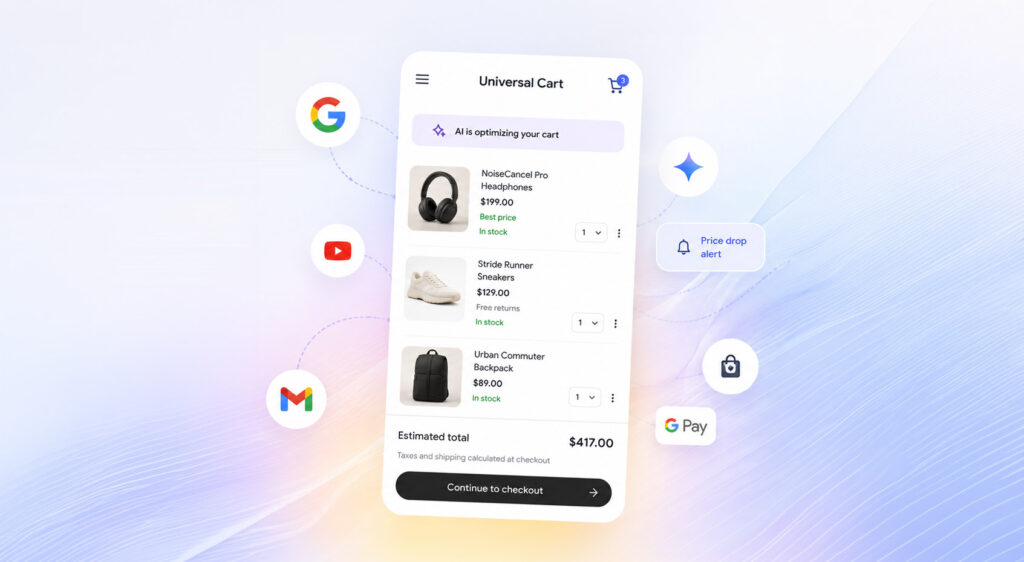
Google’s Universal Cart Could Reshape Ecommerce Faster Than Most Brands Expect
At Google I/O 2026, Google introduced “Universal Cart,” a new AI-powered shopping layer designed to follow ...
Social Feed
