



Shopify Spring 2026 Editions: What Ecommerce Brands Should Prioritize Next
Shopify’s Spring 2026 Editions is more than another product release. It is a clear signal of where ecommerce is heading next: AI-assisted shopping, faster experimentation, stronger native B2B tools, more connected marketing, smoother operations, and a checkout experience that continues to evolve around conversion.
For merchants, the challenge is not simply knowing what Shopify released. The real challenge is understanding which updates are worth acting on now, which ones should be watched closely, and which ones need a stronger technical or strategic foundation before they can create meaningful impact.
That is where the right Shopify agency partner matters. Shopify is moving quickly, but every feature should still be evaluated through the lens of revenue, customer experience, operational efficiency, and long-term scalability.
Below is a practical breakdown of the most important Shopify Spring 2026 updates and what they mean for ecommerce brands planning their next phase of growth.
Shopify Is Moving Toward AI-Powered Commerce
One of the biggest themes in Shopify Spring 2026 is agentic commerce, or the ability for products to be discovered, recommended, and purchased through AI-powered experiences beyond the traditional online store.
Shopify is investing heavily in product data, AI channels, conversational shopping, and checkout surfaces that allow customers to buy in more places. This includes updates around Shopify Catalog, product data structured for AI agents, checkout in AI-powered surfaces, and the Universal Commerce Protocol.

For ecommerce brands, this has major implications.
Your product data is no longer just for your website. It needs to be clean, structured, enriched, and ready to travel across channels. Product titles, descriptions, variant details, availability, pricing, media, compliance details, and metadata all become more important as AI-driven discovery becomes part of the shopping journey.
Brands that treat product data as an operational afterthought may struggle to show up properly in AI-powered shopping experiences. Brands that invest in better product architecture now will be better positioned as these new surfaces mature.
What to prioritize:
- Clean up product titles, descriptions, tags, metafields, and variant data.
- Make sure product availability and pricing are accurate across channels.
- Strengthen structured data and product content quality.
- Review how your catalog supports AI search, recommendations, and personalized shopping.
- Audit whether your current Shopify setup is ready for AI-assisted commerce.
This is especially important for brands with large catalogs, complex variants, subscriptions, bundles, wholesale pricing, or international markets.
Storefront Testing and Conversion Optimization Are Becoming More Native
Shopify Spring 2026 also brings meaningful updates for online storefront management, search, customer accounts, and testing.
Some of the most important updates include better storefront search for typos and unusual phrasing, AI-powered store analysis, A/B tests for online store and checkout through Rollouts, variant-level publishing, market-specific discounts, refreshed customer accounts, and longer customer account sessions.
For growth-focused brands, these updates are important because they reduce friction in two major areas: shopper experience and testing speed.
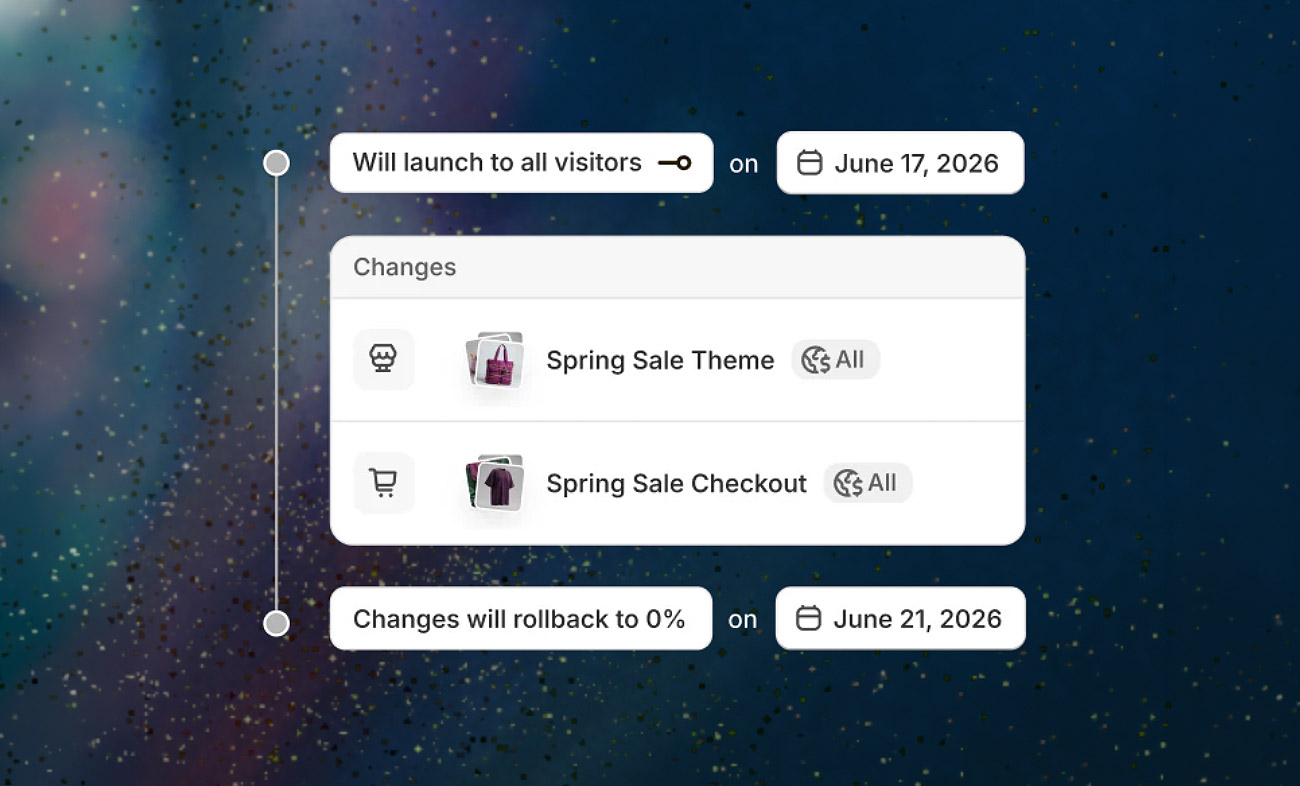
Historically, many ecommerce teams relied on a mix of apps, custom development, and manual workflows to test new storefront experiences. Shopify’s newer rollout and testing tools point toward a future where brands can ship, measure, and adjust more confidently within the Shopify ecosystem.
That said, native testing does not replace a thoughtful CRO strategy or the need for more advanced experimentation tools. Shopify’s built-in capabilities are a strong step forward, especially for simpler tests and faster validation. But for more thorough, structured, and advanced testing programs, we still recommend platforms like Shoplift, Intelligems, and Visually.
These tools are especially valuable when brands need deeper segmentation, stronger reporting, price and offer testing, personalization, merchandising experiments, landing page testing, or more robust test governance across multiple teams.
The key takeaway is not that every brand should start testing randomly. It is that brands should build a more structured optimization roadmap.
A better approach is to identify the highest-impact areas of the customer journey, such as product detail pages, collection pages, cart, checkout, customer accounts, subscription flows, and cross-sell experiences. Then, use Shopify’s growing native capabilities alongside dedicated CRO tools to validate improvements instead of relying only on opinion.
B2B Commerce Is Becoming More Accessible on Shopify
B2B continues to be one of Shopify’s most important growth areas. Spring 2026 expands access to B2B features across more plans, including company profiles, volume pricing, B2B catalogs, and additional admin tools that make it easier to manage wholesale and business buyers.
This matters for DTC brands that are expanding into wholesale, retail distribution, corporate gifting, professional accounts, or hybrid DTC and B2B selling.
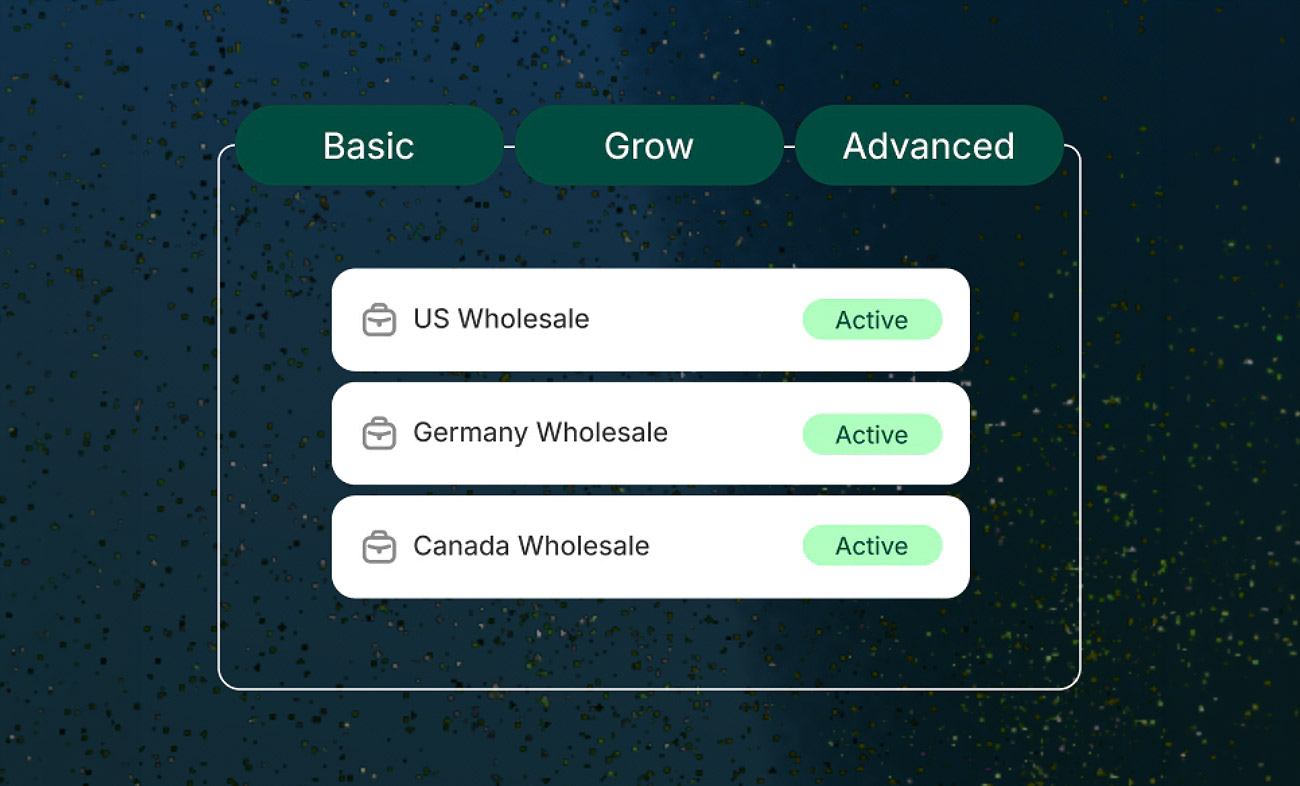
For years, many brands assumed B2B commerce required a separate platform, custom portal, or heavily customized setup. Shopify’s continued investment in native B2B functionality changes that conversation.
The key is designing the right architecture.
A strong B2B Shopify setup should account for customer-specific pricing, company accounts, payment terms, tax rules, order approvals, ERP integration, product availability, fulfillment workflows, and sales team visibility. Even as Shopify makes B2B more accessible, implementation still requires thoughtful planning.
What to prioritize:
- Decide whether B2B should live in the same Shopify store or a separate storefront.
- Map company account structures and pricing rules.
- Review wholesale catalog requirements.
- Identify ERP, accounting, and fulfillment dependencies.
- Evaluate how B2B customers reorder, request quotes, and manage users.
For brands already running wholesale manually through email, spreadsheets, or disconnected portals, Shopify’s Spring 2026 B2B updates may be a strong reason to revisit the roadmap.
Marketing Is Getting Closer to the Commerce Platform
Another major theme in Shopify Spring 2026 is marketing consolidation. Shopify introduced or expanded capabilities around Campaign Autopilot, Shop Campaigns across more channels, WhatsApp marketing, SMS automations, smart email delivery, marketing analytics, discount attribution, and fixed bundles across Google Shopping and Meta.
The broader takeaway is clear: Shopify wants more marketing activity to connect directly to commerce data.
That is valuable because ecommerce marketing is often fragmented across ad platforms, email platforms, SMS tools, attribution tools, discount tools, analytics dashboards, and customer databases. The more Shopify centralizes reporting, consent, campaign structure, and performance data, the easier it becomes for merchants to understand what is actually driving profitable growth.

That said, these updates should not be seen as a replacement for a full retention, paid media, or lifecycle strategy. They should be seen as new tools that may complement an existing stack.
For example, a brand using Klaviyo, Attentive, PostPilot, Recharge, or a paid media agency may still benefit from Shopify’s native updates, but only if the channels are mapped properly. Otherwise, teams risk duplicate messaging, messy consent data, inaccurate attribution, or disconnected campaign reporting.
What to prioritize:
- Audit your current marketing stack before adding new native tools.
- Review email, SMS, WhatsApp, and discount consent logic.
- Make sure discount links and campaigns are properly attributed.
- Evaluate Shop Campaigns as a potential acquisition or reactivation channel.
- Review whether bundles are being published correctly across paid channels.
A trusted Shopify agency can help brands decide when to use native Shopify marketing tools, when to keep specialized apps, and how to connect everything into one clean growth system.
Operations, Inventory, and Shipping Updates Reduce Manual Work
Shopify Spring 2026 includes a wide range of operational improvements across admin, Flow, inventory, fulfillment, shipping, returns, and international selling.
Some updates are simple quality-of-life improvements. Others can meaningfully reduce manual work for growing ecommerce teams.
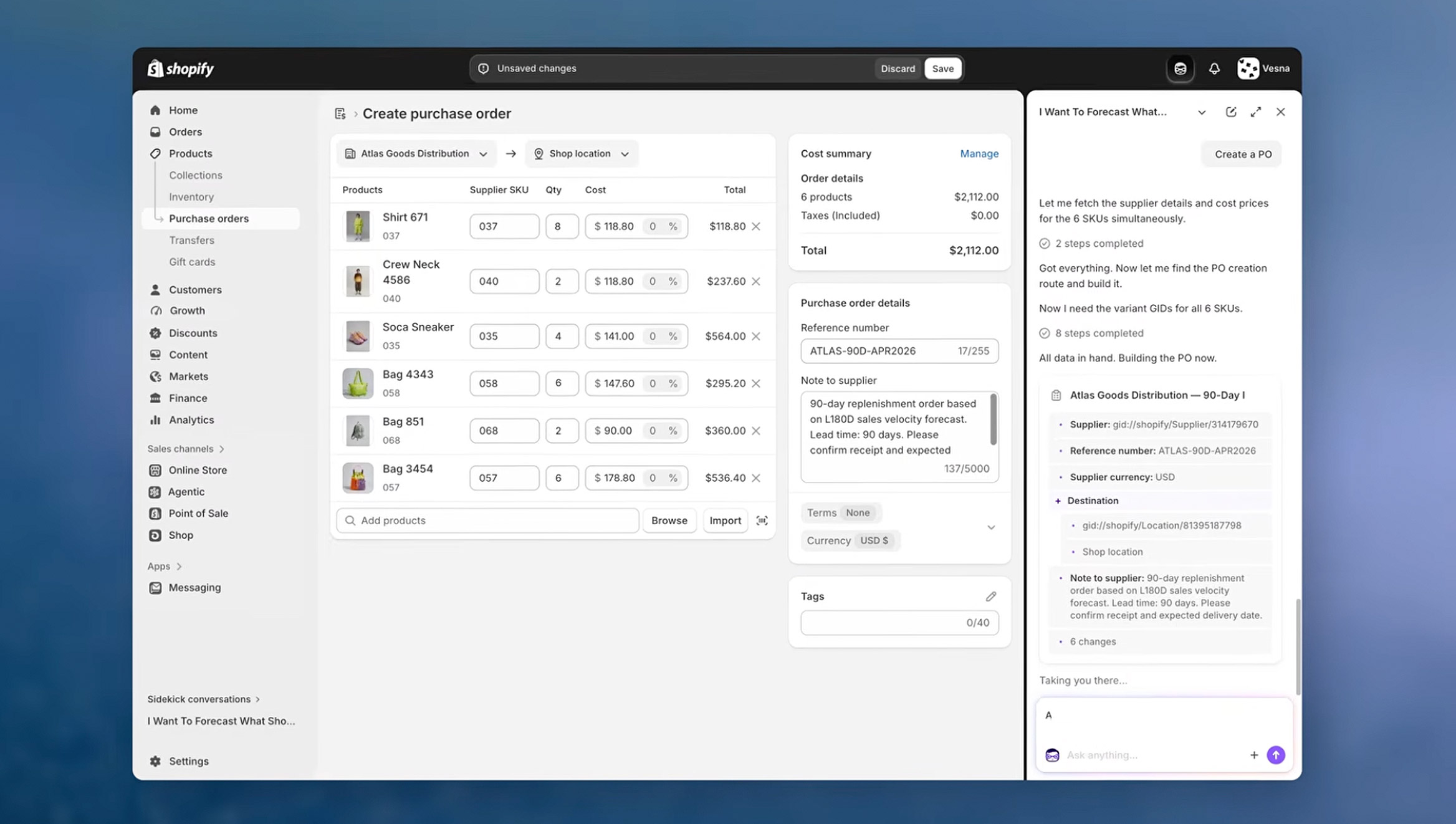
Notable areas include improved analytics, daily insights, annotations in reporting, more metafield visibility, better app activity tracking, Flow version history, automatic shipping label purchasing, faster inventory syncing, smarter purchase order workflows, shipment-level barcode receiving, batch fulfillment, carrier auto-detection, return labels, and Managed Markets improvements.
For operators, these updates are worth paying attention to because they can directly affect efficiency.
The more order volume a brand has, the more small workflow gaps matter. A fulfillment status issue, inventory delay, return reason mismatch, or manual shipping step may seem minor at low volume. At scale, those gaps create support tickets, operational cost, customer frustration, and reporting problems.
What to prioritize:
- Identify manual workflows that happen every day or every week.
- Review Shopify Flow automations and document what each one does.
- Use version history and notes to make automations easier to manage.
- Audit inventory syncing across locations and channels.
- Review return reasons and cancellation workflows for better reporting.
- Evaluate whether batch fulfillment or shipping automation can reduce labor.
For brands with multiple warehouses, retail locations, 3PLs, subscriptions, international shipping, or complex returns, these operational updates may be some of the most valuable parts of the Spring 2026 release.
Retail and Unified Commerce Are Getting Stronger
Shopify POS also received meaningful attention in Spring 2026, including a faster POS experience, scannable discounts, improved search, returns and exchanges in one cart, in-person pickup orders, offline checkout controls, in-store-only discounts, transfer workflows, cash visibility, and multi-entity selling for Shopify Plus.

For brands with both ecommerce and physical retail, this is important.
Customers do not think in channels. They expect to discover online, buy in store, return anywhere, use discounts consistently, and receive accurate inventory information. Shopify’s continued POS improvements make it easier for merchants to operate online and offline from a more unified system.
This is especially relevant for brands opening retail locations, pop-ups, showrooms, wholesale showrooms, or event-based retail experiences.
What to prioritize:
- Review whether inventory is accurate between ecommerce and retail locations.
- Make sure discounts are properly separated between online and in-store promotions.
- Evaluate pickup and return workflows.
- Train store staff on updated POS capabilities.
- Review permissions around customer data, cash handling, and offline checkout.
Unified commerce is not just a technology decision. It affects operations, staff workflows, customer service, reporting, and fulfillment logic.
Checkout and Payments Remain Core Conversion Levers
Checkout continues to be one of Shopify’s strongest areas of innovation. Spring 2026 includes updates around Shop Pay availability beyond Shopify’s online store, managed payment methods, shipping and pickup in one checkout, deeper dispute insights, local payment methods, redesigned checkout improvements, address validation, checkout branding, VAT ID validation, and order value limits.
These updates matter because checkout is where small changes can have an outsized impact.
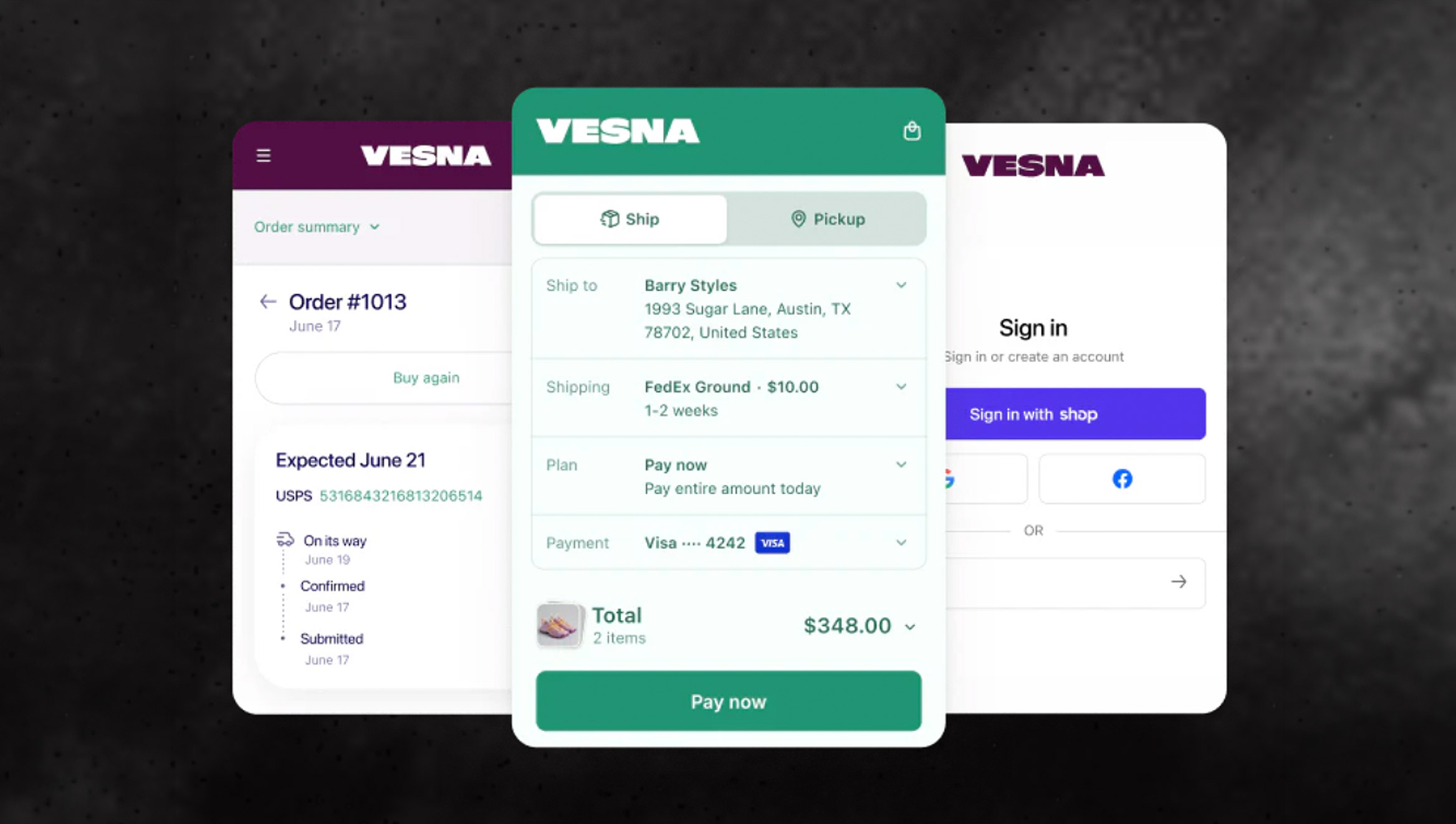
A clearer checkout, better payment method ordering, improved address suggestions, local payment options, and consistent branding can all reduce friction. For international brands, B2B brands, or retailers with pickup options, the checkout experience can be even more complex.
The key is to avoid treating checkout as a one-time setup.
Checkout should be reviewed regularly as part of conversion optimization, fraud prevention, payment strategy, fulfillment logic, and customer experience.
What to prioritize:
- Review checkout branding for consistency with the rest of the site.
- Evaluate whether payment methods are aligned with customer preferences by market.
- Test address validation and shipping logic.
- Review pickup and shipping combinations if you have retail locations.
- Audit order limits, VAT logic, and B2B checkout requirements.
- Make sure accelerated checkout options are not creating tracking or UX issues.
If your checkout has customizations, third-party dependencies, legacy scripts, subscription logic, or B2B rules, it is worth having a Shopify development agency review the impact before making changes.
Developer Updates Matter More Than Most Merchants Realize
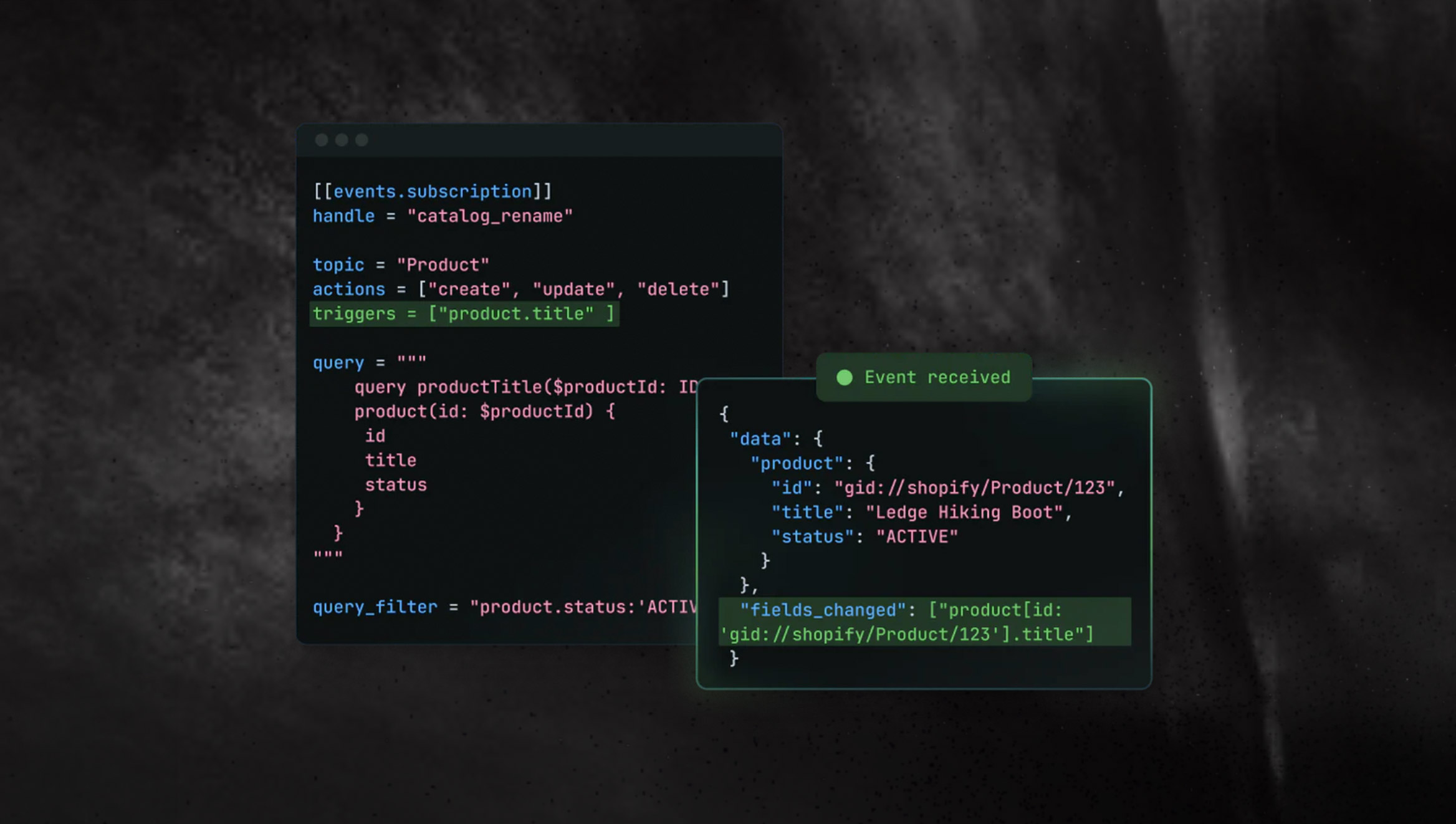
Spring 2026 also includes a deep set of developer updates, including more control over webhooks, GraphQL and bulk operations through Shopify CLI, Dev Dashboard improvements, app event monitoring, improved Polaris documentation, streamlined metafields and metaobjects APIs, checkout functions using metaobject data, improved webhook monitoring, app automation tokens, faster bulk queries, and a rebuilt Hydrogen that works with more stacks, including Next.js.
For merchants, these updates may sound technical, but they matter.
They affect how quickly development teams can build, maintain, debug, and scale Shopify experiences. They also affect how cleanly Shopify connects with apps, ERPs, PIMs, OMS platforms, subscription tools, loyalty programs, custom apps, middleware, and headless experiences.
As Shopify evolves, brands should be careful not to let their stores become fragile.
A modern Shopify build should be easy to maintain, well documented, measurable, and built with future platform changes in mind. That requires technical discipline, not just fast development.
What to prioritize:
- Audit custom apps and integrations.
- Review webhook usage and unnecessary data payloads.
- Evaluate metafields and metaobjects for cleaner content architecture.
- Review checkout customizations and Shopify Functions.
- Check whether your theme or headless architecture is future-ready.
- Document technical dependencies across your Shopify stack.
This is one of the clearest reasons to work with an experienced Shopify agency. The right partner can help your team move quickly without creating technical debt that slows you down later.
How Brands Should Prioritize Shopify Spring 2026 Updates
With more than 150 updates, the worst approach is trying to chase everything at once.
A better approach is to prioritize based on business impact.
Here is a simple framework:
1. Revenue Impact
Will this update improve conversion rate, average order value, customer lifetime value, retention, acquisition efficiency, or international sales?
2. Customer Friction
Does this update remove a known pain point in the buying journey, such as poor search, checkout friction, account issues, payment limitations, confusing shipping options, or hard-to-use B2B workflows?
3. Operational Efficiency
Can this update reduce manual work for your team, improve accuracy, reduce support tickets, or make fulfillment easier?
4. Technical Readiness
Does your current Shopify setup support this update cleanly, or do you need theme, app, checkout, integration, or data cleanup first?
5. Measurement
Can you properly track the impact before and after implementation?
This is where many brands get stuck. They know Shopify released valuable updates, but they do not know how to turn them into a practical roadmap.
Absolute Web helps ecommerce brands translate platform updates into strategy, design, development, CRO, and ongoing growth initiatives that are aligned with actual business goals.
A Suggested 90-Day Shopify Spring 2026 Roadmap
For ecommerce teams looking to act on Shopify Spring 2026, here is a practical starting point.
Days 1–15: Audit and Prioritize
Start with a full review of your Shopify store, tech stack, customer journey, analytics, product data, checkout, marketing tools, operations, and integrations. Identify which Spring 2026 updates are relevant to your business model.
Days 16–30: Fix Product Data and Storefront Foundations
Prioritize catalog quality, metafields, search behavior, product detail pages, collection logic, and market-specific content. This supports both traditional ecommerce conversion and emerging AI-driven discovery.
Days 31–45: Build a CRO Testing Plan
Identify tests around product pages, cart, checkout, account experience, subscriptions, bundles, promotions, and navigation. Use Shopify’s newer rollout and testing capabilities where appropriate.
Days 46–60: Review Marketing and Retention Workflows
Audit email, SMS, WhatsApp, Shop Campaigns, paid media feeds, discount attribution, consent data, and bundle publishing. Make sure channels are connected cleanly and not working against each other.
Days 61–75: Improve Operations and Automation
Review Flow automations, fulfillment workflows, shipping rules, inventory sync, returns, cancellations, and customer service triggers. Prioritize automations that reduce manual effort and improve customer experience.
Days 76–90: Plan Bigger Strategic Initiatives
This may include B2B expansion, international selling, POS improvements, checkout enhancements, app cleanup, replatforming, or a larger redesign. The goal is not just to “use Shopify’s new features.” The goal is to turn the right features into measurable growth.
Why Working With a Trusted Shopify Agency Matters
Shopify is shipping faster than ever. That is great for merchants, but it also creates complexity. Every new feature needs to be evaluated against your store architecture, theme, checkout, integrations, analytics setup, customer experience, marketing stack, operations, and growth goals.
A trusted Shopify agency should help you answer questions like:
- Which Shopify updates are actually relevant to our brand?
- Which updates can we implement quickly?
- Which ones require technical cleanup first?
- Will this conflict with our current apps or customizations?
- How should we measure success?
- What should be part of our roadmap now versus later?
- How do we use Shopify’s native tools without overcomplicating our stack?
Absolute Web is a Shopify Platinum Partner and ecommerce strategy, design, development, and growth agency with deep experience across Shopify Plus, custom development, UI/UX, CRO, integrations, SEO, lifecycle marketing, and ongoing support.
For brands evaluating Shopify Spring 2026, planning a migration, or looking for a trusted Shopify agency to support long-term growth, get in touch with Absolute Web to discuss your roadmap.
Final Thoughts
Shopify Spring 2026 Editions is not just a list of new features. It is a preview of where commerce is going. AI-powered discovery, faster testing, stronger native B2B, better marketing visibility, improved operations, unified retail, and more flexible development tools are all part of the same shift. Shopify is becoming a more complete commerce operating system for modern brands. The opportunity for merchants is significant, but only if these updates are implemented with focus.
The brands that win will not be the ones that turn on every new feature first. They will be the ones that understand which changes support their customer experience, operational model, and growth strategy.
For ecommerce teams, now is the right time to review your Shopify roadmap, audit your current setup, and decide which Spring 2026 updates deserve action.

Promoted
EEE Miami 2027 – The Most Inspiring Ecommerce Conference

February 3-5, 2027 | Miami, FL
In-Person Event | Get Tickets

More Articles

DoorDash Launches Native Shopify Integration: What It Means for Local Retailers
DoorDash and Shopify are making it easier for local retailers to meet a growing customer expectation: getti...

Building Trust, Community & Emotional Loyalty in Digital Commerce
At EEE Miami 2026, one of the most refreshing conversations wasn’t about ad hacks, funnels, or scaling spen...

Supplement CRO: The 4-Pillar Testing Framework for Shopify Supplement Brands
Most supplement brands do not have a traffic problem. They have a conversion clarity problem. The category ...

Growing LTV from Online Shoppers Through Smarter Customer Insights
At EEE Miami 2026, one theme kept surfacing across conversations, panels, and hallway chats: how do you gro...

The Future of Commerce: Human Creativity in an AI-Driven World
At EEE Miami 2026, one of the most practical and honest conversations around AI in ecommerce didn’t revolve...

Is Your Ecommerce Website Ready for AI Agents? The New Frontier of Ecommerce SEO
For years, ecommerce optimization focused on two audiences: humans and search engines. Today, there is a th...

Building What Matters: The Founder’s Blueprint for Brand Longevity
In today’s ecommerce landscape, building a brand is easier than ever. Building one that lasts? That’s a com...
Google’s Universal Cart Could Reshape Ecommerce Faster Than Most Brands Expect
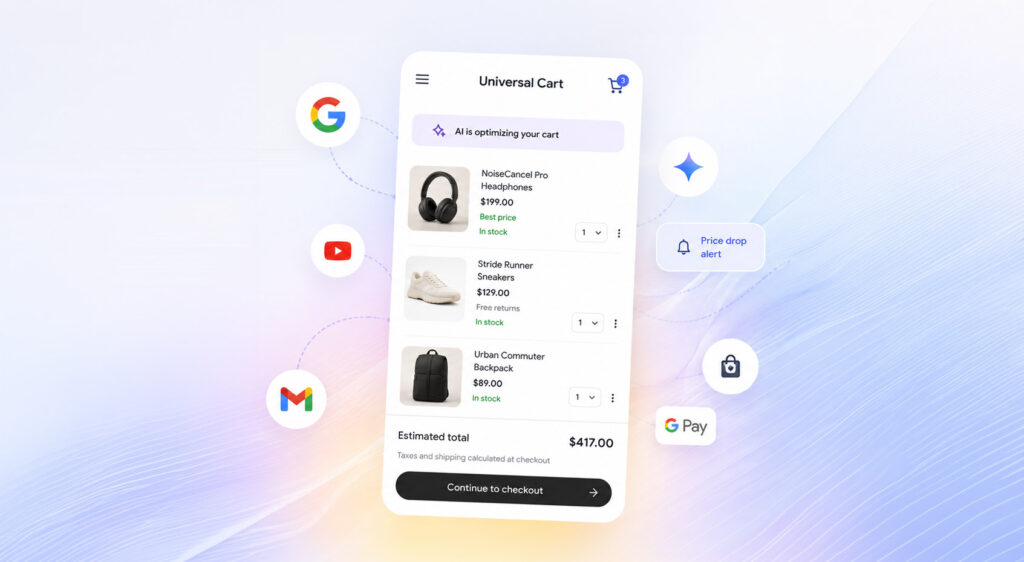
At Google I/O 2026, Google introduced “Universal Cart,” a new AI-powered shopping layer designed to follow ...
Social Feed
