

Google’s Universal Cart Could Reshape Ecommerce Faster Than Most Brands Expect
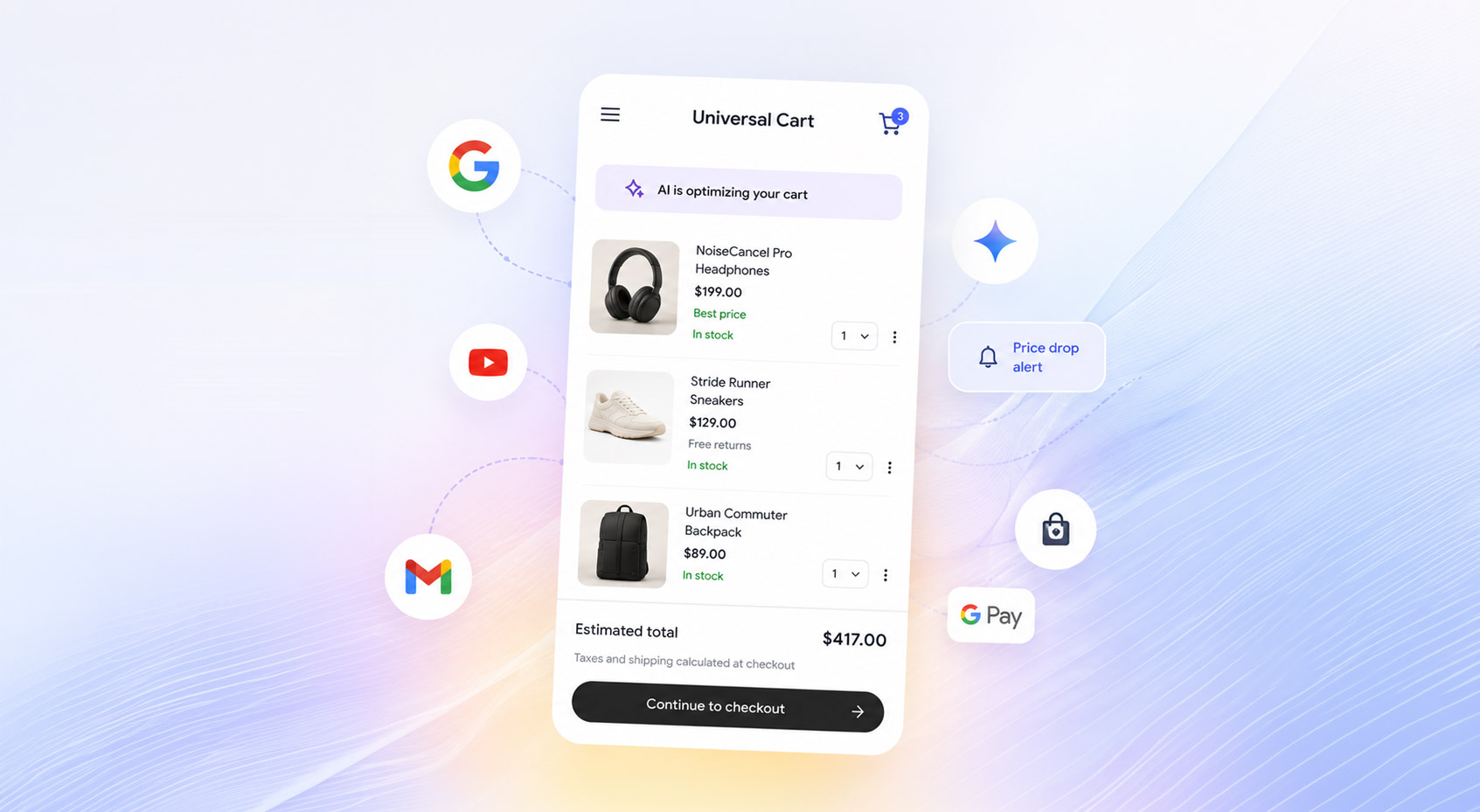
At Google I/O 2026, Google introduced “Universal Cart,” a new AI-powered shopping layer designed to follow consumers across Search, Gemini, YouTube, Gmail, and participating ecommerce sites. On the surface, it looks like a convenience feature. In reality, it may signal one of the biggest shifts in digital commerce since mobile shopping became mainstream.
For ecommerce teams, this is not just another Google Shopping update.
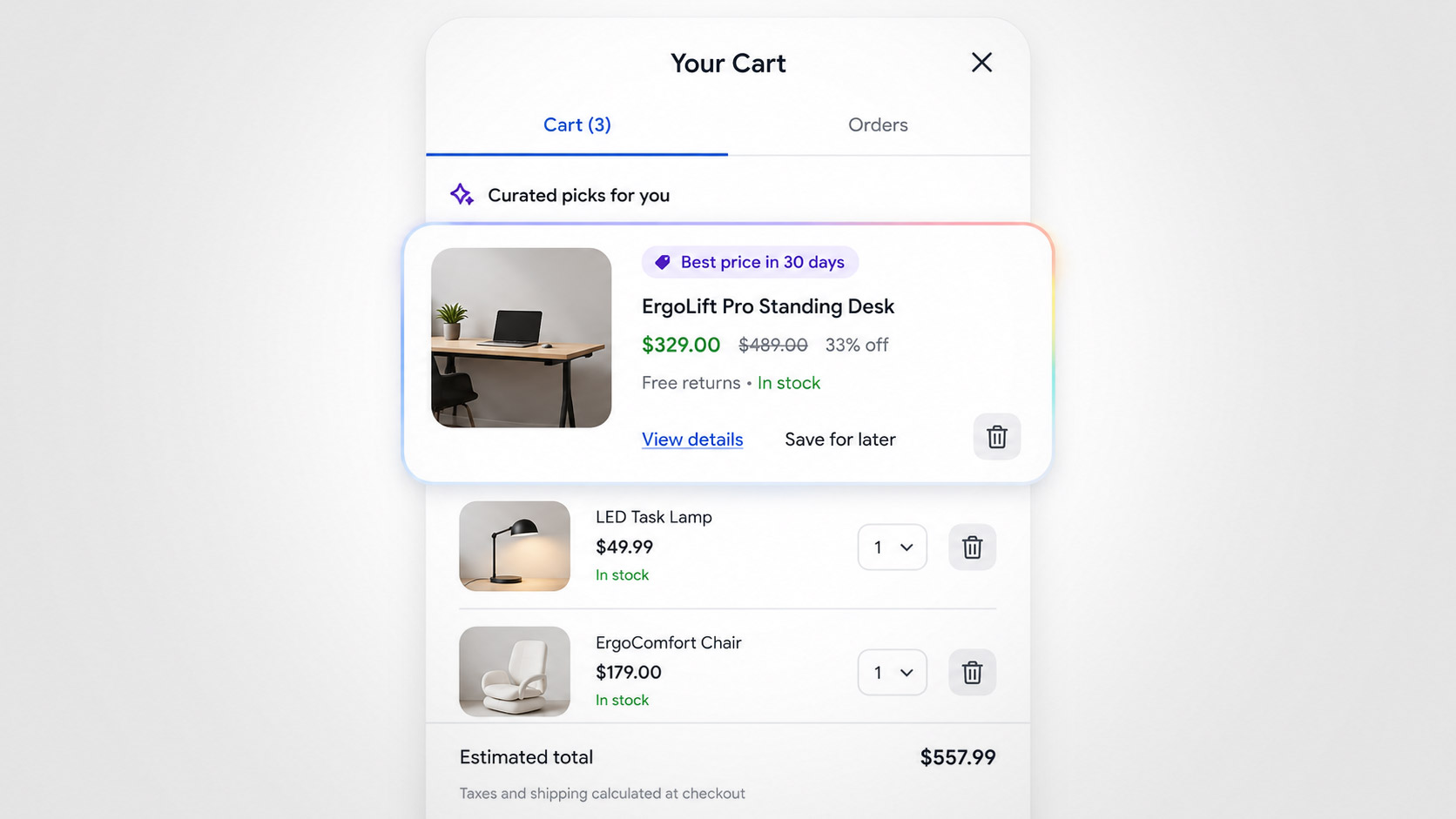
This is Google attempting to become the connective tissue between discovery, consideration, cart creation, and checkout across the entire internet.
What Is Google Universal Cart?
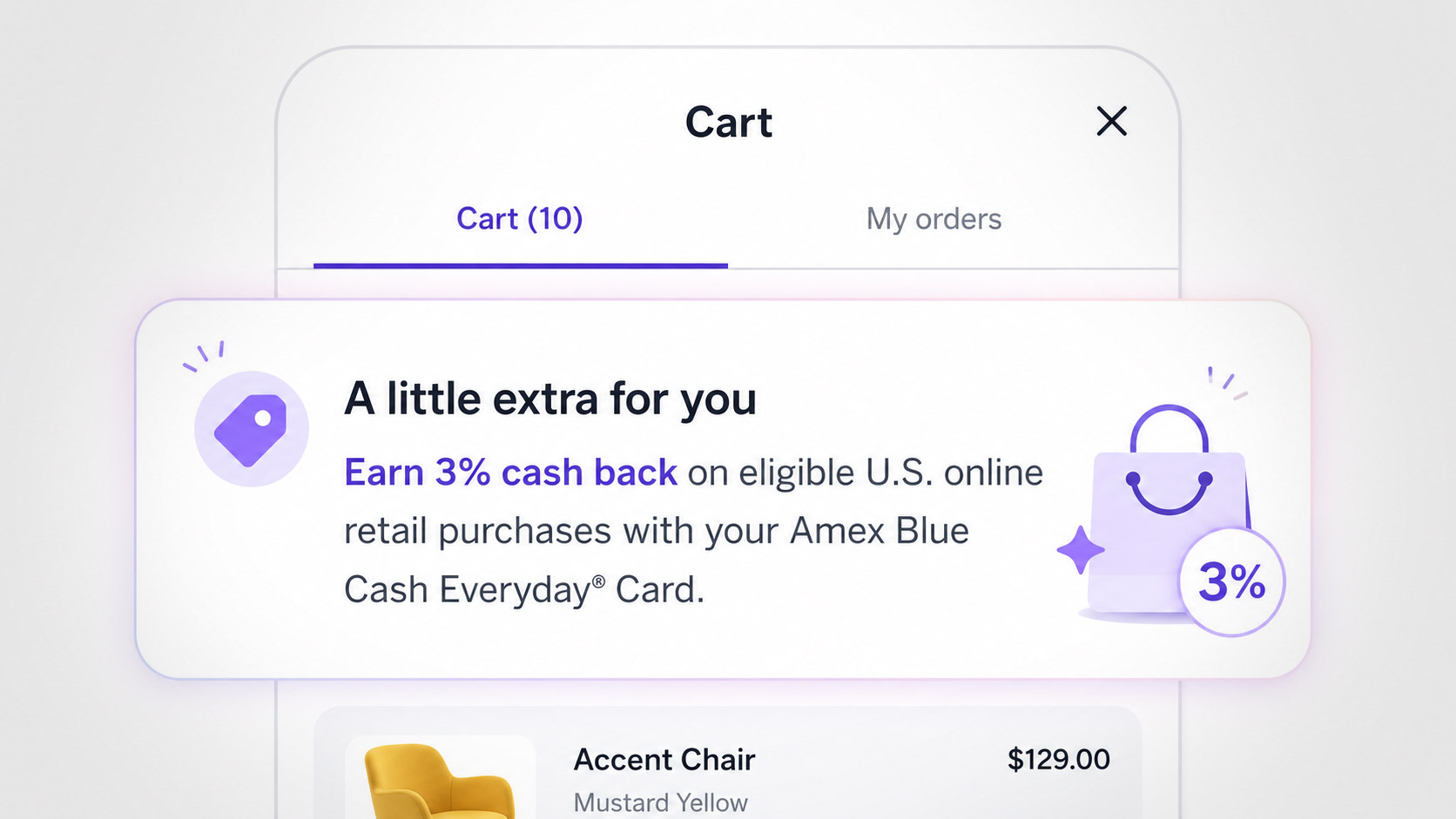
Universal Cart is essentially a persistent AI-assisted shopping cart that works across merchants and Google properties. A shopper could:
- Discover a product in Google Search
- Watch a review on YouTube
- Ask Gemini follow-up questions
- Receive price-drop alerts in Gmail
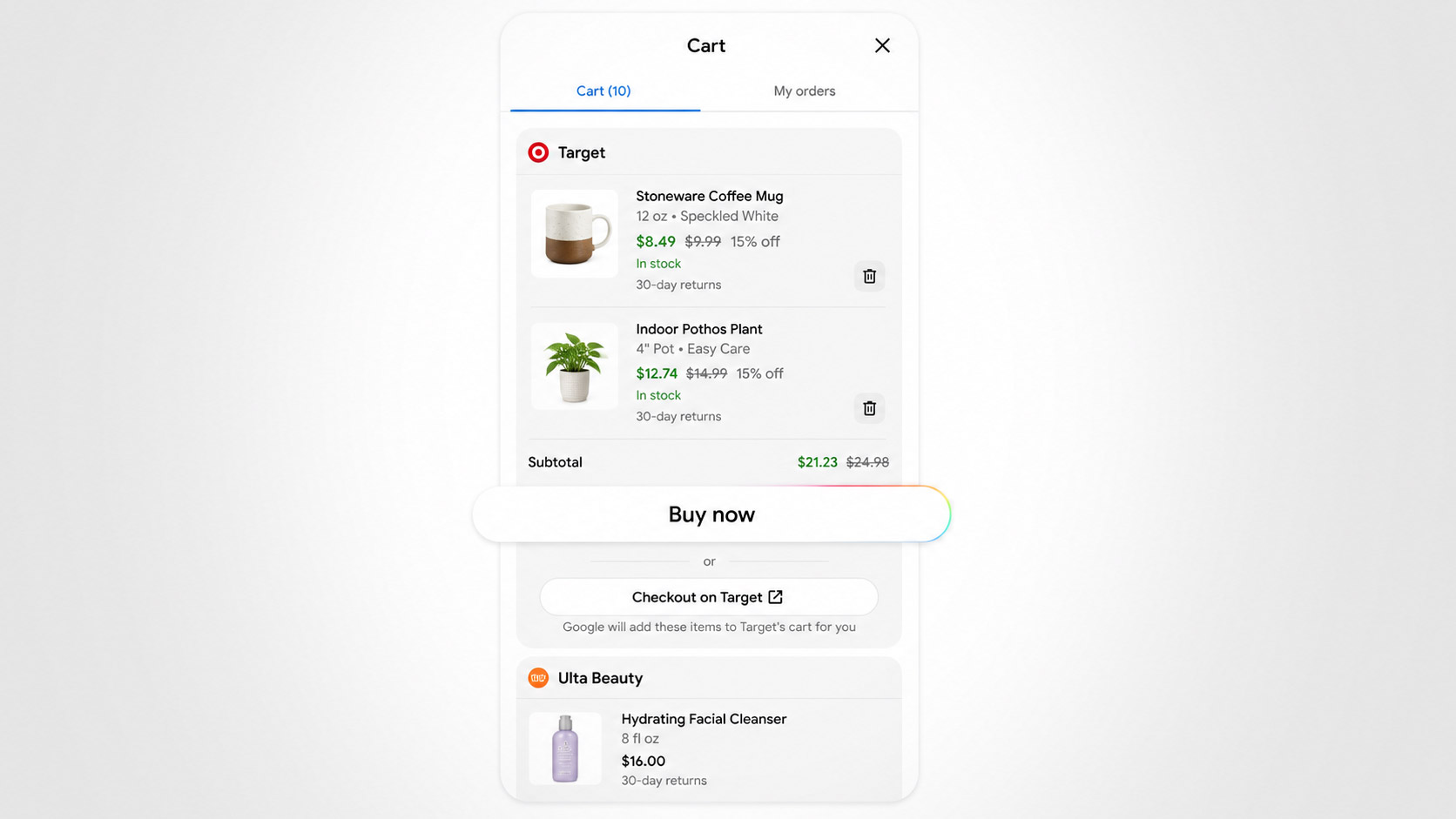
- Add products from multiple retailers into one centralized cart
- Checkout either through Google Pay or directly with the retailer
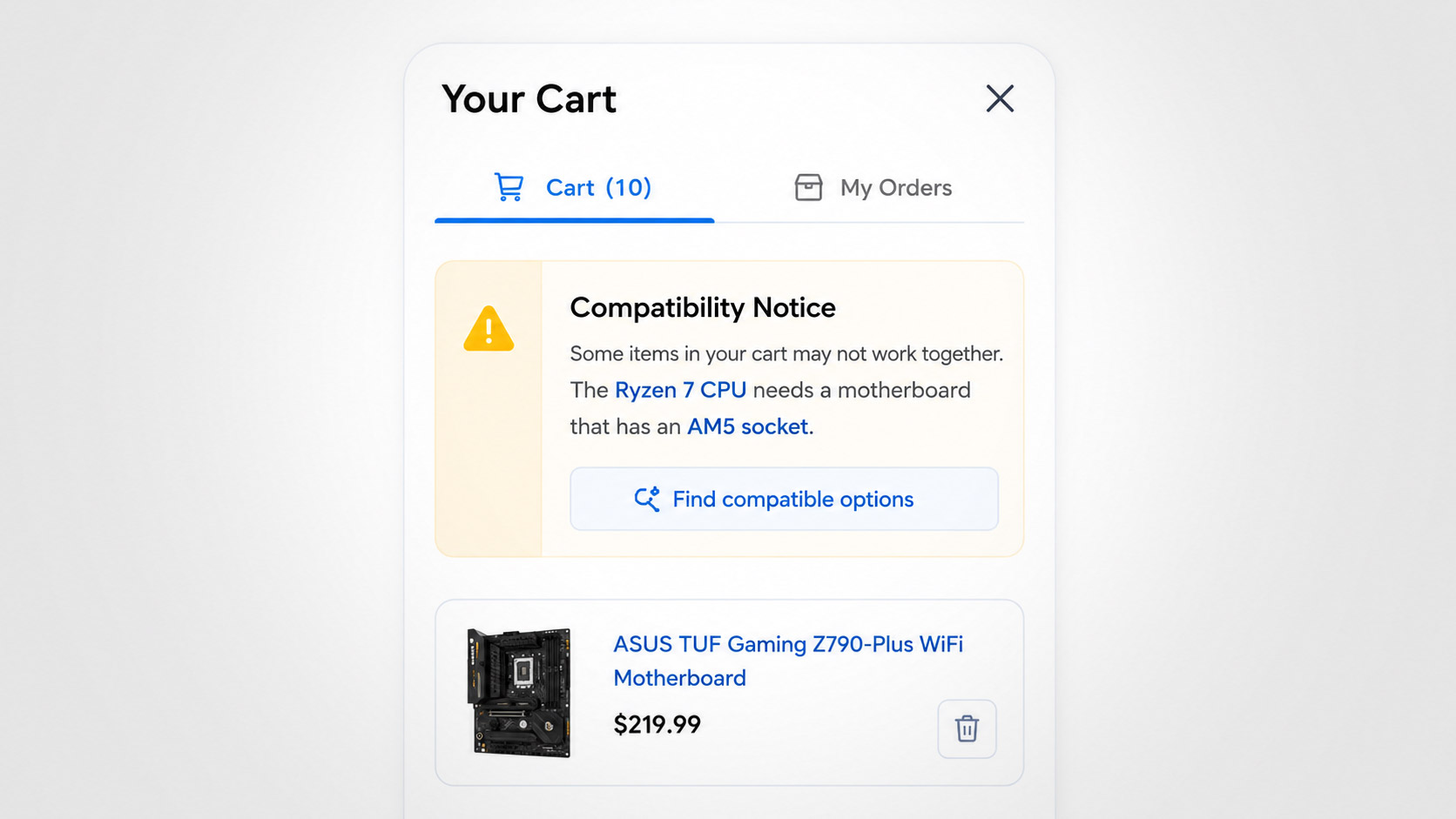
Google says the system can proactively help shoppers by flagging product incompatibilities, suggesting alternatives, applying loyalty perks, surfacing discounts, and even helping optimize payment methods.
The bigger picture is what Google calls “agentic commerce,” where AI assistants increasingly guide and automate purchasing decisions instead of users manually browsing dozens of tabs and product pages.
Why Ecommerce Teams Should Actually Care
A lot of platform announcements come and go. This one feels different because it changes where influence happens during the buying journey.
Historically, brands fought for:
- Rankings
- Ad visibility
- Email engagement
- PDP optimization
- Checkout conversion
Now there’s a new layer in between: the AI decision layer.
Google is positioning itself as the operating system for shopping intent.
If consumers increasingly rely on Gemini or Google-powered shopping assistants to:
- compare products
- validate compatibility
- monitor pricing
- recommend alternatives
- optimize carts
- trigger replenishment purchases
…then traditional merchandising and acquisition strategies start changing fast.
The “visit the website, browse manually, add to cart” journey becomes less dominant.
The Real Risk: Brands Losing Ownership of the Shopping Journey
This is probably the biggest strategic concern for ecommerce brands.
Universal Cart could increase convenience for shoppers, but it also creates more distance between the consumer and the merchant experience.
Google becomes:
- the recommendation engine
- the product comparison layer
- the loyalty interpreter
- the cart orchestrator
- potentially even the checkout facilitator
That creates serious questions around:
- brand differentiation
- customer loyalty
- attribution
- owned audiences
- margin pressure
- customer data ownership
We’ve already seen this happen with marketplaces. The difference now is that Google is attempting to do it across the open web rather than inside a closed ecosystem like Amazon.
SEO and CRO Are About to Evolve Again
This also changes how brands should think about optimization. Traditional SEO focused heavily on rankings and clicks. Now brands may need to optimize for:
- AI-readable product data
- structured compatibility data
- real-time inventory signals
- pricing transparency
- merchant trust signals
- enriched product attributes
- fulfillment confidence
- review quality
In many cases, AI systems may summarize or evaluate your products before the user even lands on your site. We’re already seeing signs of this broader shift through AI Overviews and AI-driven search experiences, where Google increasingly synthesizes information directly in the results layer.
That means ecommerce brands may need to think beyond:
“how do we get traffic?”
And start asking:
“how do we become the preferred recommendation inside AI-driven shopping systems?”
Merchants Will Need Better Product Data Than Ever
One overlooked part of Google’s announcement is the emphasis on reasoning and compatibility. Google specifically mentioned scenarios like building a custom PC where the system can identify incompatible parts and recommend alternatives. That implies the future shopping stack relies heavily on:
- accurate product relationships
- structured metadata
- taxonomy quality
- inventory synchronization
- compatibility logic
- enriched feeds
Brands with messy catalogs, weak attribute structures, inconsistent merchandising, or fragmented data systems could struggle in AI-powered discovery environments. This becomes especially important for:
- electronics
- automotive
- beauty/skincare
- supplements
- apparel sizing
- furniture
- configurable products
- subscription products
Google Is Quietly Building the Infrastructure for AI Commerce
Universal Cart is only part of the story.
Earlier this year, Google introduced the Universal Commerce Protocol (UCP), an open framework intended to standardize how AI agents interact with merchants, retailers, and commerce systems. The goal appears to be creating infrastructure where AI assistants can:
- search products
- compare inventory
- understand policies
- complete purchases
- manage post-purchase experiences
In other words:
Google is preparing for a future where AI agents become active participants in commerce, not just passive recommendation tools.
What Ecommerce Brands Should Be Doing Right Now
Most brands don’t need to panic. But they should absolutely start preparing.
Some key areas worth focusing on:
1. Improve Product Data Structure
Invest in:
- better taxonomy
- richer attributes
- compatibility logic
- feed quality
- schema markup
- real-time inventory accuracy
AI shopping systems will rely heavily on clean data.
2. Strengthen Brand Differentiation
If AI assistants increasingly summarize products generically, brands need stronger emotional differentiation:
- community
- creator relationships
- retention
- storytelling
- loyalty ecosystems
- exclusive experiences
The more commoditized the discovery layer becomes, the more important brand affinity becomes.
3. Focus on First-Party Retention
Email, SMS, loyalty, subscriptions, memberships, and post-purchase engagement become even more valuable if top-of-funnel ownership weakens.
4. Optimize for AI Discovery
This likely becomes its own discipline over the next 12-24 months.
Brands should begin evaluating:
- how products appear in AI-generated answers
- how feeds are interpreted
- how product data is surfaced
- how reviews and trust signals are synthesized
5. Reduce Friction Everywhere
If Google is optimizing convenience aggressively, merchants need to eliminate friction too:
- faster checkout
- clearer PDPs
- simplified subscriptions
- better mobile UX
- faster site speed
- better account experiences
Convenience is becoming a competitive moat.
Final Thoughts
Universal Cart is bigger than a cart feature.
It’s another major signal that ecommerce is moving toward AI-mediated shopping experiences where algorithms increasingly influence what consumers discover, compare, trust, and purchase. For brands, the opportunity is massive. But so is the risk of becoming interchangeable inventory inside someone else’s ecosystem.
The winners will likely be the brands that combine:
- strong structured commerce data
- differentiated brand identity
- excellent retention ecosystems
- operational efficiency
- AI-ready merchandising strategies
Because the next battle in ecommerce may not just be about ranking first. It may be about becoming the product the AI chooses first.

Promoted
EEE Miami 2027 – The Most Inspiring Ecommerce Conference

February 3-5, 2027 | Miami, FL
In-Person Event | Get Tickets

More Articles

DoorDash Launches Native Shopify Integration: What It Means for Local Retailers
DoorDash and Shopify are making it easier for local retailers to meet a growing customer expectation: getti...

Building Trust, Community & Emotional Loyalty in Digital Commerce
At EEE Miami 2026, one of the most refreshing conversations wasn’t about ad hacks, funnels, or scaling spen...
Shopify Spring 2026 Editions: What Ecommerce Brands Should Prioritize Next
Shopify’s Spring 2026 Editions is more than another product release. It is a clear signal of where ecommerc...
Supplement CRO: The 4-Pillar Testing Framework for Shopify Supplement Brands
Most supplement brands do not have a traffic problem. They have a conversion clarity problem. The category ...
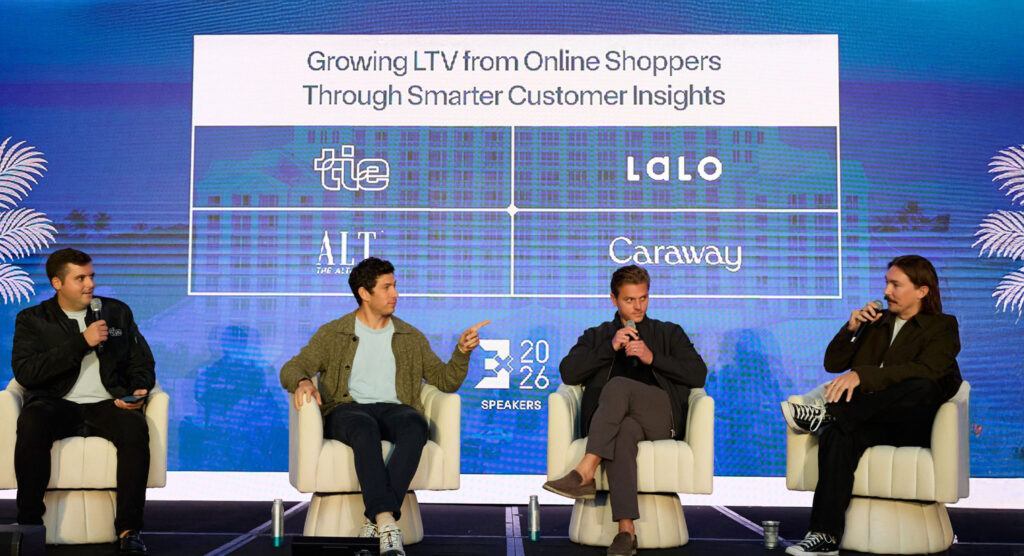
Growing LTV from Online Shoppers Through Smarter Customer Insights
At EEE Miami 2026, one theme kept surfacing across conversations, panels, and hallway chats: how do you gro...
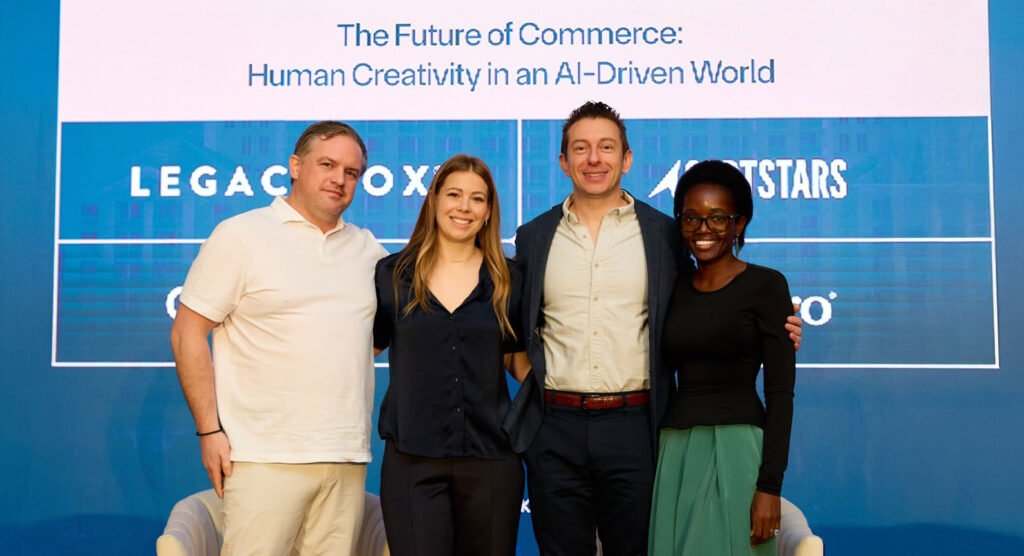
The Future of Commerce: Human Creativity in an AI-Driven World
At EEE Miami 2026, one of the most practical and honest conversations around AI in ecommerce didn’t revolve...
Is Your Ecommerce Website Ready for AI Agents? The New Frontier of Ecommerce SEO
For years, ecommerce optimization focused on two audiences: humans and search engines. Today, there is a th...

Building What Matters: The Founder’s Blueprint for Brand Longevity
In today’s ecommerce landscape, building a brand is easier than ever. Building one that lasts? That’s a com...
Social Feed
