




Nulastin CRO Case Study
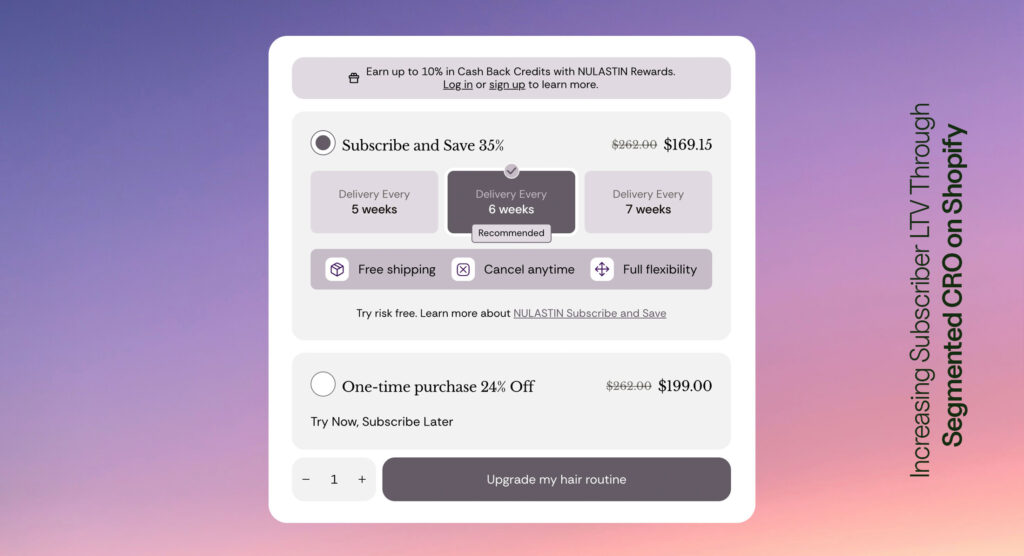
Increasing Subscriber LTV Through Segmented CRO on Shopify
Platforms and Integrations:
See all our Partners




Challenge:
This case study outlines how we partnered with Nulastin, a subscription-focused Shopify brand, to increase active subscribers, improve retention behavior, and grow long-term revenue through a structured conversion rate optimization (CRO) program.
Rather than optimizing for short-term metrics alone, our approach focused on improving subscriber quality and lifetime value, using metrics such as Revenue per Visitor (RPV) and first-time subscription conversion as leading indicators of long-term impact.
- UIUX Design & Strategy
- Conversion Rate Optimization
- Rebuy Slideout Cart
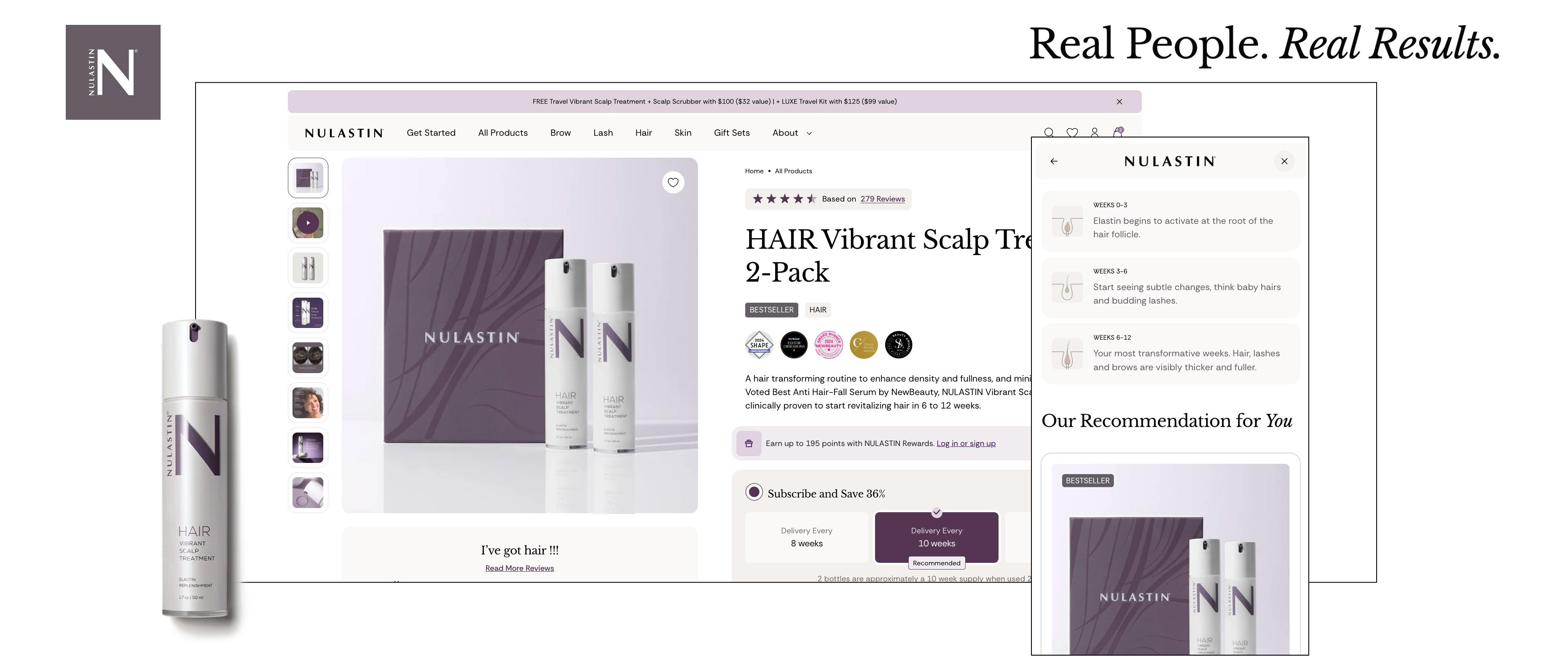
- Product Page Improvement
- Performance Optimization
- Affiliate Software Integration
- Post Purchase Experience
- Bazaarvoice Reviews Migration
Executive summary


Improve subscriber retention and repeat behavior


Conversion Rate (CR)
First-time Subscription Conversion
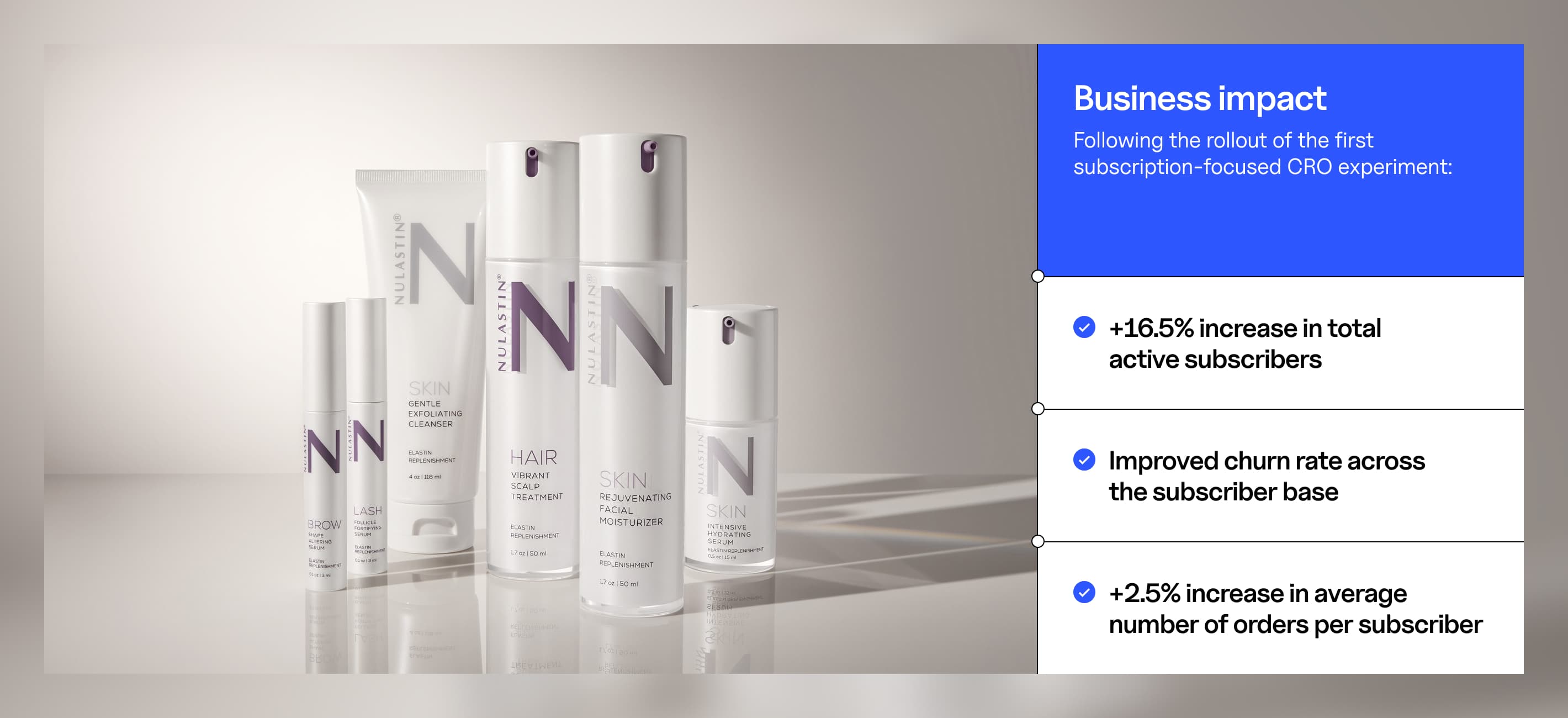
Business impact
Following the rollout of the first subscription-focused CRO experiment:
Optimization framework
Each experiment was designed and evaluated through an LTV-first lens.

First-time subscription conversion
Add-to-Cart Rate (ATC)

Visitor intent: New vs Returning
Optimizations were deployed selectively, only when data supported a positive long-term impact.
Experiment breakdown
Quick View on Product Listing Pages (PLP)
Consistent performance across devices and visitor types
No negative signals on subscription behavior
Accelerated Payments on Product Detail Pages (PDP)
- +31.4% Conversion Rate
- +37.3% Revenue per Visitor
- Strong lift in first-time subscription conversion
returning mobile users only
Subscription Upsell Modal on PDP
Meaningful lift in first-time subscription conversion
No negative impact on churn indicators
PDP Experience Variant (Loss)
No segment demonstrated potential LTV upside
Accelerated Payments in Quick View (PLP)
Returning visitors showed improved subscription and RPV signals
returning users only
Reviews Placement Below Product Title
Desktop users showed positive leading indicators
desktop only
Key learnings
LTV-driven CRO requires segment-level decision-making.
Returning users are the strongest driver of long-term value.
Leading indicators (RPV, subscription conversion) must be evaluated in context.
Selective rollouts protect both revenue and customer experience.
Stopping underperforming tests is a critical part of sustainable optimization.
Final takeaway
For subscription businesses like Nulastin, CRO is not about optimizing a single metric. It’s about designing experiences that increase customer lifetime value — and using metrics like Revenue per Visitor as early signals, not end goals. This segmented, LTV-first CRO approach delivered sustainable subscriber growth while minimizing risk across the funnel.
Ready to grow?
MAKE IT HAPPEN
